


The turbocharged engines that power modern Maserati vehicles — from the twin-turbo V6 in the Ghibli to the Ferrari-derived turbocharged powerplants in the Quattroporte and Levante — are designed to deliver a level of performance that justifies the Maserati name. Turbochargers are central to that performance, compressing intake air to generate substantially more power from a given engine displacement. But turbos are also among the hardest-working components in the entire drivetrain — spinning at up to 150,000 RPM and operating in a continuous flow of extremely hot exhaust gas. When a Maserati turbocharger begins to fail, the signs are usually unmistakable, and ignoring them leads to repairs that dwarf the cost of catching the problem early. At World Class Auto Repairs in Boca Raton, we specialize in European performance vehicles and handle Maserati turbocharger diagnosis and repair regularly.
How Maserati Turbochargers Work and Why They Fail
A turbocharger consists of two turbine wheels connected by a common shaft — one driven by exhaust gas flow, the other compressing incoming intake air. The shaft spins on a thin film of engine oil that provides both lubrication and cooling. This design is elegantly simple but demanding: the oil supply must be clean, consistent, and properly maintained, because any interruption — even brief — can cause the bearings to contact the housing and begin the process of failure. Maserati’s turbocharged engines require oil that meets strict viscosity and quality specifications, and extended oil change intervals or use of incorrect oil are among the most common causes of premature turbo bearing wear. Heat soak after engine shutdown, when oil circulation stops but exhaust temperatures remain high, can also carbonize residual oil in the bearing housing over time.
Warning Signs of Turbocharger Failure on a Maserati
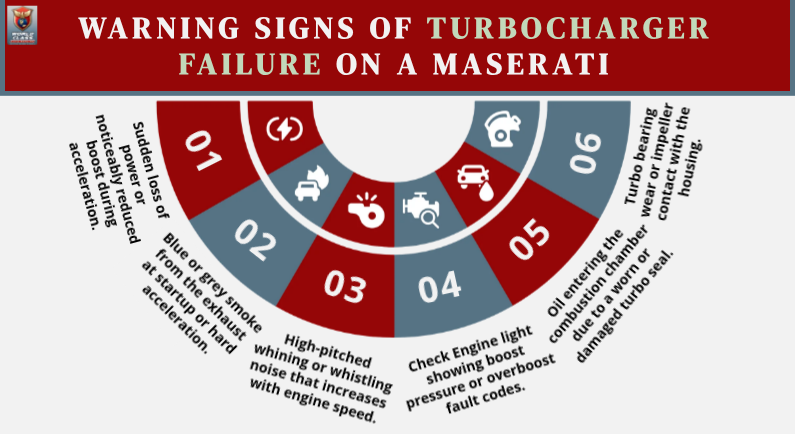
Boca Raton Maserati owners should know the early warning signs that distinguish a developing turbocharger problem from normal operation. A sudden loss of power or noticeably reduced boost — the feeling that the car has lost its urgency during acceleration — is often the first indicator that one or both turbos are no longer compressing at full capacity. Blue or grey smoke from the exhaust, particularly at startup or during hard acceleration, indicates that oil is entering the combustion chamber through a worn or damaged turbo seal. A high-pitched whining or whistling noise from the engine bay that increases with engine speed points to turbocharger bearing wear or impeller contact with the housing. A Check Engine light storing boost pressure or overboost fault codes is another strong indicator. Any of these symptoms warrants immediate professional diagnosis — continued driving with a failing turbo can scatter metal debris through the engine and intake system.
The Risk of Continued Operation With a Failing Turbo
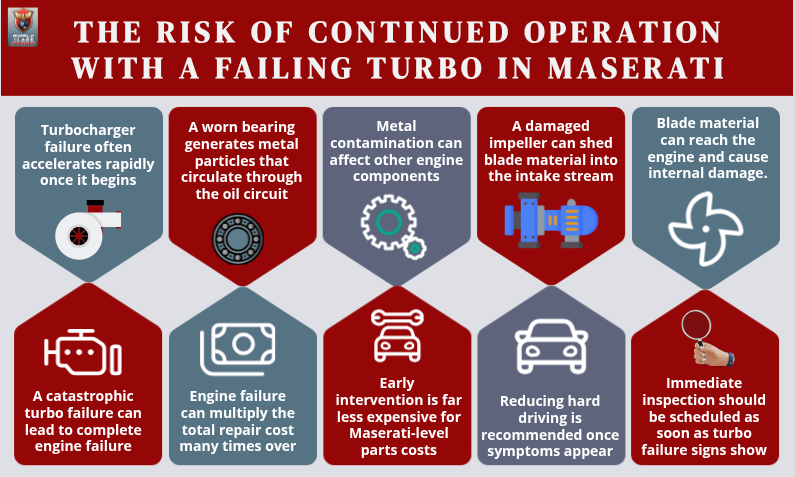
One of the most important things to understand about turbocharger failure is that it often accelerates rapidly once it begins. A bearing that starts to wear generates metal particles that circulate through the oil circuit, contaminating other engine components. A damaged impeller can shed blade material into the intake stream, which reaches the engine itself. In worst-case scenarios, a catastrophically failed turbocharger can cause engine failure that multiplies the repair cost many times over. For a vehicle of Maserati’s caliber and parts cost, early intervention is far less expensive than the alternative. As soon as turbo failure symptoms appear, reducing hard driving and scheduling an immediate inspection is the right course of action.
Professional Maserati Turbo Service at World Class Auto Repairs
Our Boca Raton shop approaches Maserati turbocharger repairs with the care and thoroughness these vehicles require. We begin with a full diagnostic scan to read boost-related fault codes and inspect oil supply lines and return lines for restriction or carbon buildup. We check oil condition and record service history to identify whether maintenance lapses contributed to the failure. Turbocharger replacement on Maserati vehicles uses quality components that meet OEM specifications, and we perform an engine oil flush before installing new turbos to ensure no contaminated oil reaches the new bearings. Post-repair, we verify boost pressure at multiple load points before returning the vehicle to service.
Schedule Your Maserati Turbo Inspection in Boca Raton
If your Maserati is showing any signs of turbocharger trouble, act quickly. At World Class Auto Repairs in Boca Raton, our European car specialists have the expertise to diagnose and repair your Maserati correctly. Call us at (561) 451-0502 or visit us at 9787 Glades Rd, Boca Raton, FL 33434 to schedule your appointment today.
Frequently Asked Questions
Q: How long should a Maserati turbocharger last?
A: With proper oil maintenance and normal driving, Maserati turbos can last 100,000 miles or more. Neglected oil changes, incorrect oil, or frequent short trips are the most common causes of early failure.
Q: Can I drive my Maserati if it’s blowing blue smoke?
A: Blue smoke from a turbo seal failure means oil is burning in the combustion chamber. We recommend against driving until the problem is diagnosed — continued operation accelerates damage.
Q: Is it better to rebuild or replace a failed Maserati turbocharger?
A: For most Maserati applications, we recommend OEM-quality replacement units over rebuilds, as they offer predictable longevity and proper specification fit for these high-output engines.
Q: Should I change the engine oil when replacing a turbocharger?
A: Absolutely — a failed turbocharger often contaminates the oil with metal particles. Fresh oil and a flush before installing new turbos is a critical step in preventing immediate repeat failure.